memory

Tablet centered in a softly lit blue-and-peach corner displays the text “(I do not think it means) what you think it means,” while shadows of a flower and a dagger appear on opposite walls, suggesting meanings beyond the words on the screen.

What You Think It Means

A third of recent websites now contain AI-generated text; Google is increasingly making AI summaries the default mode of knowledge retrieval; and third parties are creating “sloppelgangers” of artists’ web pages with AI. What might this trend mean for cultural heritage, and what should we do about it?

What You Think It Means Read More »
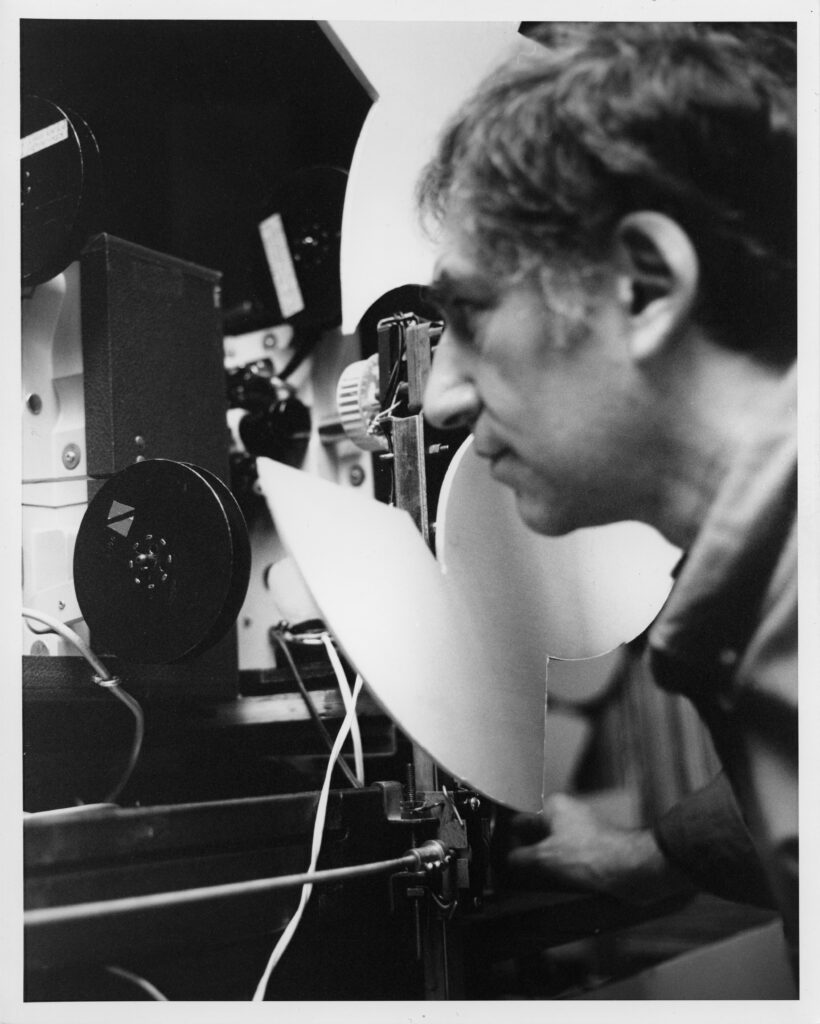
Ken Jacobs inspecting one of his projectors, ca. 1995

Ken Jacobs and Preserving the Immaterial

This week we lost a figure known as “the dean of American avant-garde film.” Ken Jacobs was renowned for his ability to turn the humblest materia prima of cinema, including 16mm projectors and dusty reels of found footage, into optical sorcery. In so doing, he also turned time-honored assumptions about media preservation on their head.

Ken Jacobs and Preserving the Immaterial Read More »

Web archiving illustration

Preserving the most ephemeral of media

As more of our work and entertainment moves online, the challenge of preserving websites and social media becomes increasingly urgent. In an interactive discussion on Friday 17 April at 1pm EDT entitled “Web Archiving for Everyone,” the latest guest speaker in UMaine’s Digital Curation program presents new tools and techniques for saving Internet culture for

Preserving the most ephemeral of media Read More »

Yale keynote asks whether art can be permanent in the digital age

  At Yale’s May 11th symposium “Is This Permanence?”, Still Water’s John Bell and Jon Ippolito help curators and historians plan for a digital future in which “archival material” could be a contradiction in terms.

Yale keynote asks whether art can be permanent in the digital age Read More »

Is reinterpretation the new emulation?

Reinterpretation as a preservation strategy has been called “radical” and “dangerous,” yet this unconventional approach has seen a surge of interest in preservation communities in the past year. In a departure from conventional wisdom about conservation, a group of European preservation experts recently invited Still Water’s Jon Ippolito to reassess this controversial technique as a

Is reinterpretation the new emulation? Read More »

Re-collection book tour pleads for digital preservation from Toronto to Taiwan

In 2015 Re-collection: Art, New Media and Social Memory continued to gather attention from libraries, universities, and the press. This just-published MIT Press book by Richard Rinehart and Still Water Co-Director Jon Ippolito surveys new paradigms and techniques for safeguarding culture for future generations in the face of imminent technological obsolescence. Since last summer the

Re-collection book tour pleads for digital preservation from Toronto to Taiwan Read More »

Scroll to Top