
Corruption gets its own platform
Online markets are turning war—and other policies—into wagers.
Corruption gets its own platform Read More »
Online markets are turning war—and other policies—into wagers.
Corruption gets its own platform Read More »

This week we lost a figure known as “the dean of American avant-garde film.” Ken Jacobs was renowned for his ability to turn the humblest materia prima of cinema, including 16mm projectors and dusty reels of found footage, into optical sorcery. In so doing, he also turned time-honored assumptions about media preservation on their head.
Ken Jacobs and Preserving the Immaterial Read More »
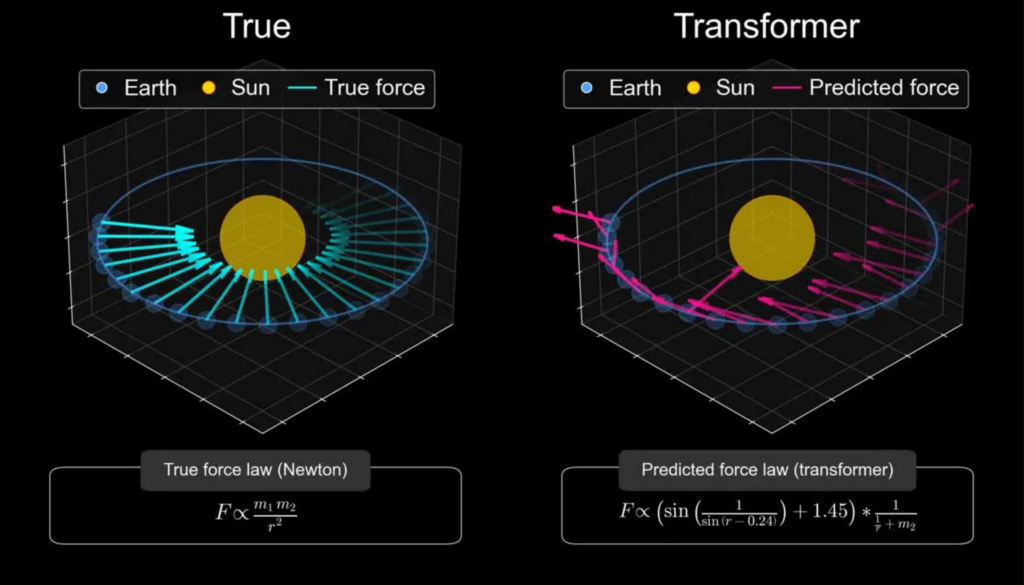
Of all the AI buzzwords out there, the word “model” would seem free of hyperbole compared to “superintelligent” or the “singularity.” Yet this innocuous-seeming word can mean two contradictory things, and AI companies are deliberately muddling the line between them. A recent Harvard/MIT study of simulating planetary orbits illustrates the contrast between what scientists consider
Ptolemaic Thinking in the Age of AI Read More »
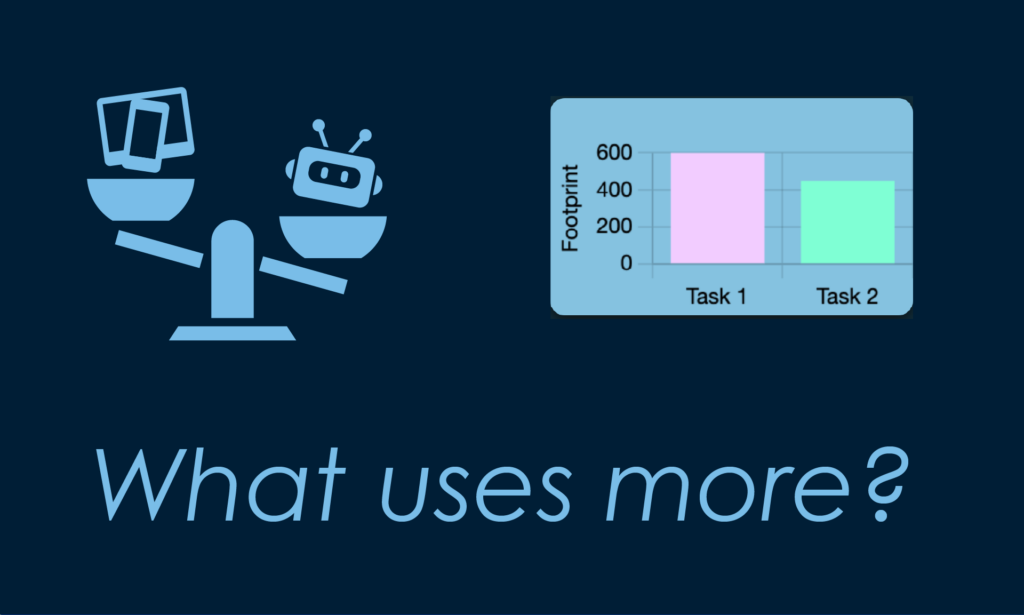
How many AI videos equal watching a Netflix movie? A tool launched last week by the Still Water lab lets students compare the hidden costs of digital habits across both AI and non-AI activities.
New app helps students compare the environmental cost of AI and everyday tech Read More »
This April’s teleconference from UMaine’s Digital Curation program looks at the practical and ethical issues of integrating AI into archival workflows—and how human crowdsourcing can fill in the gaps.
Should you let AI manage your collection? Read More »

When he died last Wednesday, artist Mel Bochner left a body of work that’s gained in relevance in a half century defined by information—even more so in the age of AI. The artist’s death holds special meaning for me because he was a mentor when I was in graduate school at the Yale School of
Mel Bochner and the bridge from words to worlds Read More »
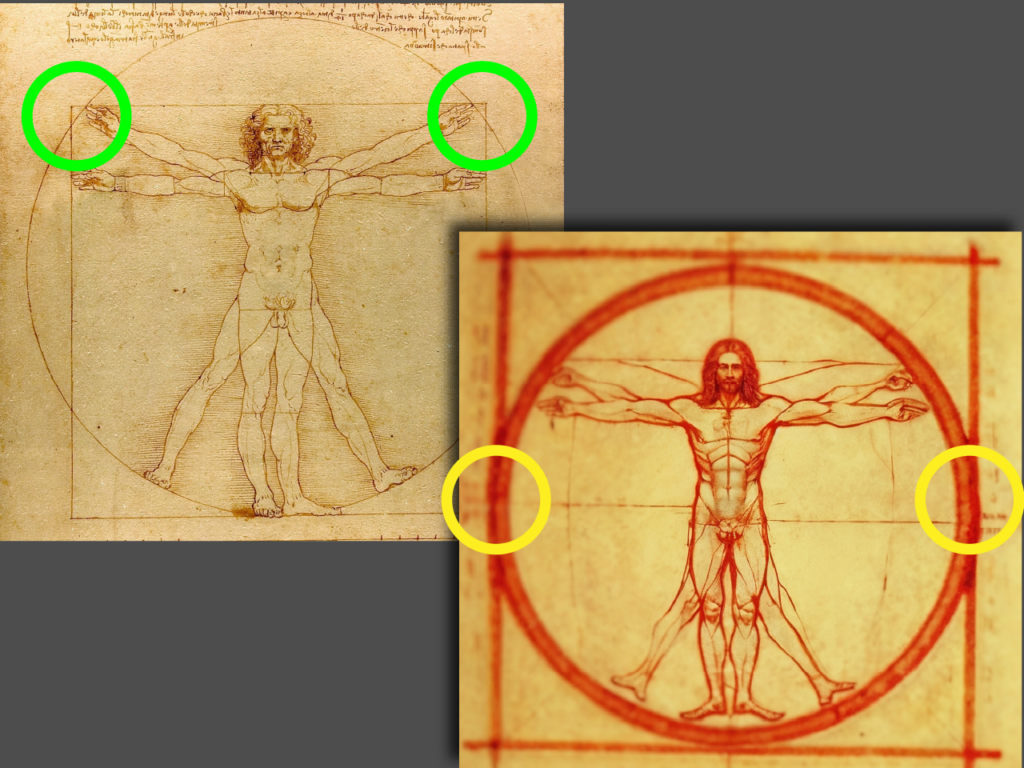
Most of us know by now that generative AI can promote stereotypes based on biased data. Yet even when the training data is saturated with perfectly accurate representations—and little to no inaccurate ones—the results can still be biased. Why is this so?
AI, Old Masters, and the Geometry of Misinformation Read More »

What happens to ground truth when finding a factoid or photo no longer means consulting an archive but generating one from scratch? That’s the question that drives “Honey, AI Shrunk the Archive,” an essay I wrote for the forthcoming anthology New Directions in Digital Textual Studies.
AI as miniature archive Read More »

Diversity without cacophony Group discussions on controversial subjects can open students to more viewpoints, but they can also result in the usual suspects—sometimes the most thoughtful students, but often just the loudmouths—dominating the conversation. So I was intrigued when Greg Nelson and Rotem Landesman, my collaborators on a course that examines in-depth the impact of
Pooling ideas for an AI ethics policy Read More »
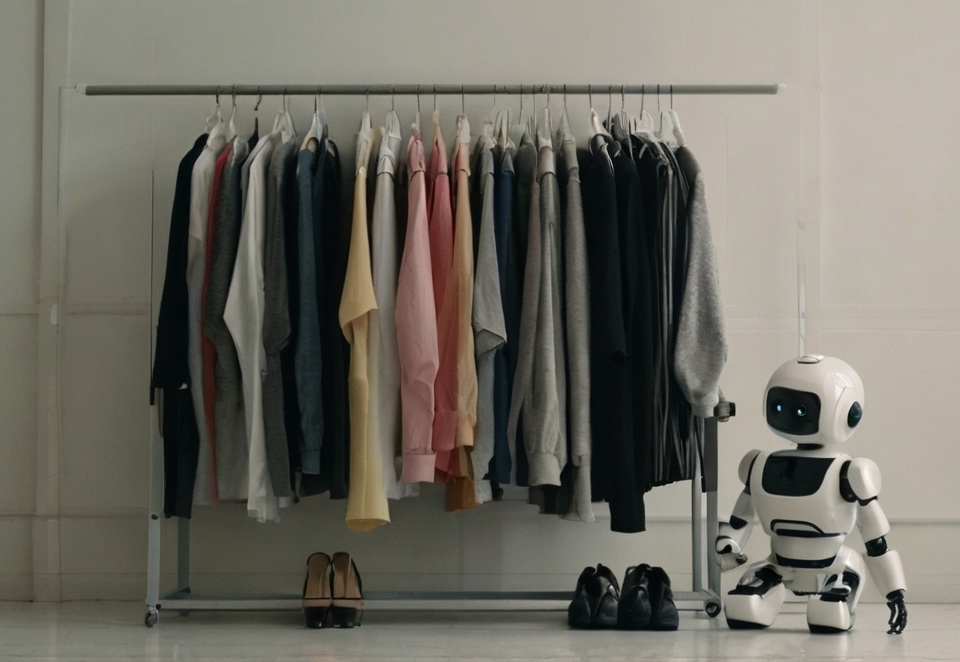
When a tech reporter for the NY Times outsourced her decisions for a week to ChatGPT, she complained that “AI made me basic.” But it turns out the math behind generative AI can lead to results that are blandly average or wildly inaccurate.
“AI made me basic” Read More »